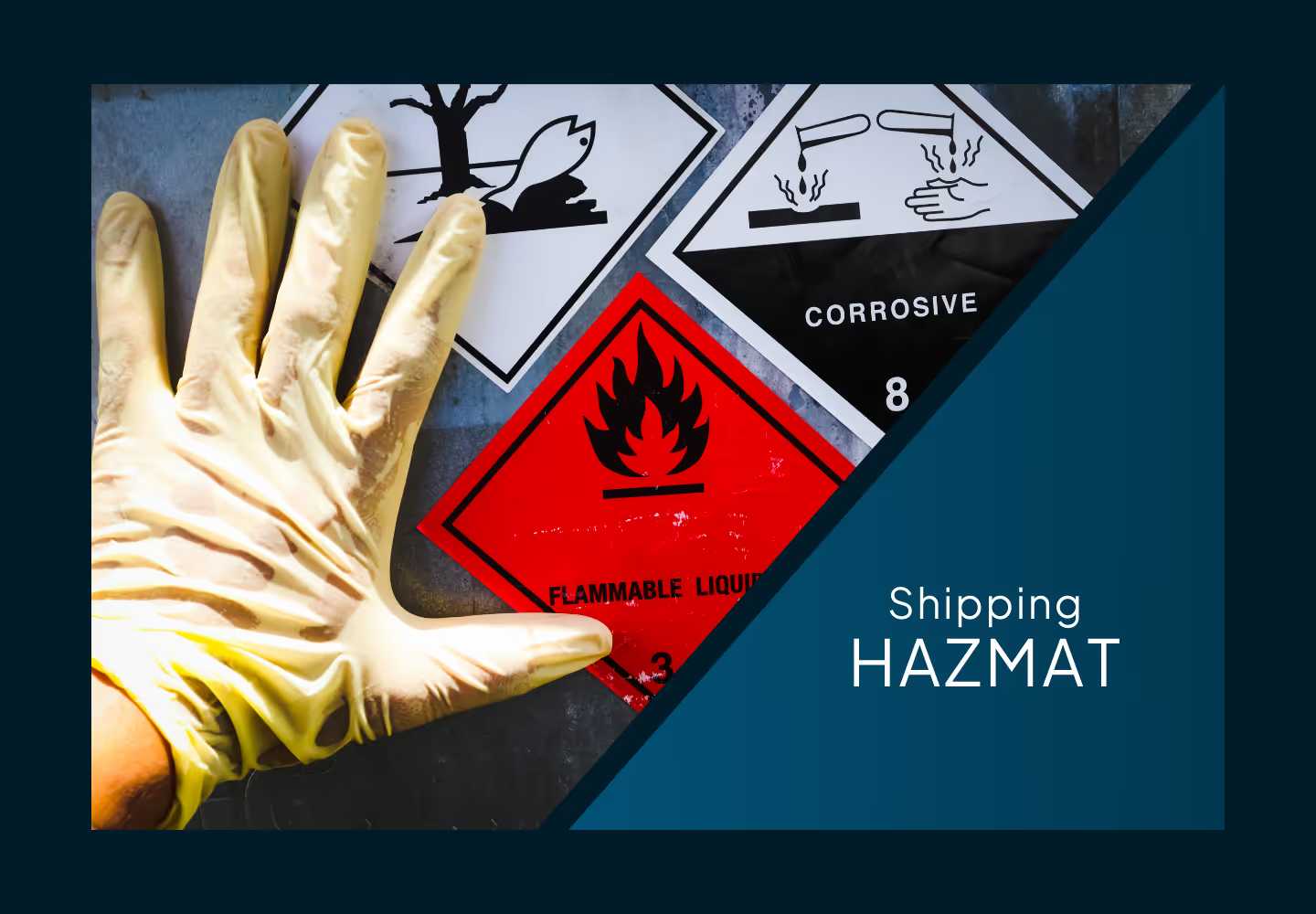
Key take-aways
- Shipping hazardous materials requires strict packaging, labeling, and documentation. Small mistakes cause big delays and large fines.
- Hazmat items include flammable, pressurized, corrosive, or toxic goods, many of which are everyday consumer products.
- Knowing the correct hazard class, UN number, and quantity limits ensures you choose the right packaging and stay compliant.
- Carriers follow DOT, PHMSA, IATA, FAA, and IMDG rules, so shipments must be prepared accurately before leaving your facility.
- Most carriers require you to be an approved or contract hazmat shipperbefore you print a single label, and each one accepts different classes byservice and mode.
- Consistent routines, accurate labeling, compliant packaging, and automated tools keep hazmat workflows predictable and safe.
____
Shipping hazardous materials calls for steadiness, accuracy, and a clear routine. These items can create risk if spilled, crushed, leaked, ignited, or damaged, so every step must follow the rules set by regulators and carriers. When the process is unclear or handled on the fly, small mistakes appear quickly - a label gets missed, the wrong box gets used, or a shipment is pausedbefore it leaves your dock. A steady, predictable workflow prevents these issues and keeps your operation compliant even when volume spikes.
What is considered hazardous material?
Hazmat includes items that are flammable, reactive, pressurized, toxic, or corrosive. Many everyday items meet this definition, for example, lithium batteries, spray paint, perfumes with alcohol, aerosols, adhesives, cleaning supplies, certain chemicals, and some medical products. These items often look harmless but are regulated because of how they react under pressure, heat, or impact.
Many hazardous materials appear in both consumer and commercial shipments, but the rules can change based on quantity and destination. Consumer shipments often qualify for limited quantity provisions when items stay below set thresholds, while commercial shipments usually exceed those limits and require stricter packaging, labeling, and paperwork. The same SKU may require different handling depending on whether it’s shipping to a customer or to another business. A single example makes the point: perfume with alcohol can move byground but is barred from domestic air, and hand sanitizer ships as a flammableliquid that stays on surface transportation only. Those decisions start with understanding how the item is classified.
Hazmat classification
Understanding how hazardous materials are classified gives your team a strong foundation for safe shipping. Each hazard class comes with its own rules for packaging, labeling, paperwork, and carrier handling. When teams know the class of an item before it reaches the packing station, they can prepare the right materials and avoid delays.
The table below breaks down the major hazard classes and what they mean in day-to-day shipping. After the table, we’ll cover hazmat codes and how they help teams identify each item more precisely.
Hazard codes vs hazard classes
Hazard classes describe the broad type of risk, but hazmat codes identify the item at a more specific level. Each regulated product has a UN number and proper shipping name, both of which must appear on labels and shipping papers. These codes help carriers, warehouse teams, and inspectors understand exactly what is inside the package.
You can look up the UN number and proper shipping name for any regulateditem in the PHMSA Hazardous Materials Table (49 CFR 172.101), the federalreference that governs domestic hazmat. Most operations store hazmat codes inside their product catalog so the correct rules apply the moment an order enters the system. This keeps paperwork consistent, reduces manual work, and makes it easier to pack and label items correctly.
Hazmat rules and regulations
Hazmat shipping regulations are shaped by federal and international agencies. Carriers rely on these standards to determine what they can accept, how items should be packed, and how shipments move through their networks.
Several regulatory agencies and industry bodies set the rules for shipping hazardous materials. Each one focuses on a different mode of transport, but all share the same goal of keeping people and packages safe.
DOT and PHMSA (domestic ground shipping)
DOT and PHMSA regulate how hazardous materials move by road and rail within the United States. They define how items must be classified, packaged, labeled, marked, and documented before a carrier picks them up. These rules also guide employee training and shipper responsibilities.
If your operation handles domestic hazmat shipping, these are the baseline rules you follow every day.
FAA and IATA (air shipping)
Air transport has tighter restrictions because pressure changes and altitude increase risk. FAA oversees safety for all U.S. air carriers, while IATA provides detailed instructions for both domestic and international air shipments.
Together, they set clear limits on what can fly, how items must be prepared, and which documentation is required. This is especially important for lithium batteries, aerosols, and other items that can react in flight.
IMDG Code (ocean shipping)
The IMDG Code governs how hazardous materials move across oceans. It covers container requirements, labeling standards, storage rules on vessels, and emergency procedures.
Because ocean shipments take longer and pass through multiple ports, the IMDG Code ensures each package remains safe throughout its journey
Who is allowed to handle hazardous shipments?
Only trained employees can prepare or sign for hazardous materials shipping papers. Training needs to be refreshed on a regular cycle to keep employees aligned with new regulations and carrier requirements. DOT requires recurrent training at least every three years, and IATA airtraining every two years. Carriers also require correct documentation before a package enters their system. When steps are missed, shipments may need correction before moving forward.
Which carriers ship hazmat, and what they require
USPS
USPS accepts some hazardous materials as restricted items and prohibits others outright. Many everyday consumer goods, such as perfume with alcohol, hand sanitizer, nail polish, and certain aerosols, can move domestically by ground but not by air. Items like gasoline, liquid mercury,explosives, and ammunition are prohibited from the mail entirely. Lithium batteries are mailable domestically only under specific conditions. When you mail HAZMAT, you must separate those packages from all others and present themin a container marked "HAZMAT." The full rule set lives in USPS Publication 52, which is the reference to check before you commit to a USPS lane.
UPS
UPS accepts fully regulated hazardous materials on a contract basis only. Before you ship, you sign a UPS Hazardous Materials Agreement, prepare shipments with compliant hazmat software, and run them through a scheduled pickup account. One useful exception - limited quantity ground shipments within the 48 contiguous states generally do not require the agreement or shipping papers, which covers a lot of consumer hazmat.
FedEx
FedEx handles hazardous materials via FedEx Ground and dangerous goods via FedEx Express, and you must be approved first by agreeing to the Hazardous Materials Qualification Form (OP-910). FedEx Ground moves hazmat within the continental U.S. only, not to or from Alaska or Hawaii, and uses the OP-900 shipping paper. FedEx Express follows IATA air rules, even when the shipment travels partly by ground. Either way, hazmat has to go out through a scheduled pickup, not a drop box or retail counter.
DHL and regional carriers
DHL and regional carriers each run their own hazmat and dangerous goods programs with their own approval steps, accepted classes, and lane restrictions. Confirm the specifics with the carrier or your account rep before you route regulated freight to them, and never assume a lane that works for one carrier works for another.
The takeaway for your operation is to know which carrier accepts which class and mode before an order reaches the packing station, and enforce those rules at the system level so nothing gets routed to a service that will reject it. Teams can enforce this within ShipWise with automation rules that route hazmat shipments to approved lanes by SKU and service.
Preparing a hazardous shipment
Classify and verify your materials
Identify the hazard class, packing group, and any quantity limits. This classification determines the hazmat package type, the labels you apply, and which carriers can take the shipment.
Choose the right packaging
Hazardous shipments often require strong, tested containers marked for hazmat use. Items inside may need padding or absorbents to prevent leaks and to keep the contents stable during transit.
Many hazardous materials ship in UN-specification packaging. These containers are tested for strength, pressure, and durability, and the markings on them confirm they meet required performance standards.
ShipWise Cartonization applies SKU-level rules so teams automatically choose compliant packaging and avoid mispacks. This reduces the chance of mispacks and supports safe handling throughout the process.
Limited quantity options
Some hazardous materials qualify for limited quantity or excepted quantity rules. These options reduce certain paperwork and packaging requirements when the item stays within set limits. Many consumer goods fall into this category, such as small aerosols or alcohol-based products. Checking these limits early in your process helps prevent over-packaging and keeps shipments moving without extra steps.
Add correct labels and markings
Hazardous shipping labels and markings give carriers the information they need to route and handle each package safely. Labels show the hazard class. Markings show handling and identification details such as UN numbers or orientation arrows. Both are required, and each serves a different purpose in keeping the shipment compliant.
Complete required documentation
Each shipment needs a completed set of hazmat shipping papers that list the item’s proper name, UN number, hazard class, and quantity. These papers usually travel with the package and stay accessible to carriers during pickup and transit.
Security considerations for certain materials
Some hazardous materials require a written security plan that explains how they’re stored, accessed, and handled inside your facility. These plans outline simple steps your team follows to keep sensitive items controlled from the moment they enter the warehouse to the moment they’re released for shipment.
Paperwork needed for hazmat shipping
Hazmat shipping papers tell the carrier exactly what is inside the package and how it must be handled. These documents follow a set structure, and every detail needs to be accurate for the shipment to move without delay. Clear paperwork helps carriers route, store, and deliver hazardous materials safely.
For most shipments, you should include:
Basic description
This lists the UN ID number, proper shipping name, hazard class, and packing group.
Quantity and packaging details
The number of packages, total weight, and the type of container used.
Emergency contact information
A phone number that is monitored at all times during transit. This number must connect to someone who can provide details about the material at any time during transit, which is a required part of emergency response information
Shipper certification
A required statement confirming the shipment was prepared according to regulations.
International shipments may also need a Dangerous Goods Declaration, which adds another layer of detail for cross-border movements.
Hazmat returns
The same requirements apply when hazardous items are returned. A product remains regulated even if it has been opened, damaged, or partially used. Treating hazmat returns like standard returns can create compliance issues if classification, packaging, or documentation no longer applies.
Carrier handling requirements
Once hazardous materials leave your facility, carriers follow strict rules for how they’re stored, segregated, and secured. Their teams rely on the labels, markings, and documentation you provide to handle each package safely. Preparing shipments correctly on your end helps them move through these checks without delay.
Common errors to avoid
Errors in hazmat shipping often lead to rework for your team, delayed pickups, and disrupted fulfillment workflows.
Missing or incorrect labels
Labels that do not match the hazard class create confusion and slow down the carrier.
Incorrect packaging
Using the wrong box or container leads to spilled materials or carrier holds.
Carrier acceptance issues
Some carriers only accept certain hazmat classes, and some require an approved shipper agreement you may not have inplace yet. When this is missed, packages get flagged during pickup.
How to handle flagged hazmat shipments
Even well-prepared hazardous shipments can be flagged during pickup or intake. When this happens, having a clear response plan prevents delays from spreading across your operation.
Most rejections stem from missing labels, incorrect packaging, or carrier acceptance mismatches. When a shipment is paused, your team should verify the hazard class, confirm the UN number and proper shipping name, and check that the carrier selected supports that material and mode of transport.
Building a simple escalation path, such as routing flagged shipments to a trained reviewer, helps resolve issues quickly without forcing packers to guess. Treating rejections as process signals rather than one-off mistakes strengthens the system over time.
Best practices for shipping hazmat
Strong routines help hazmat shipments move safely through your operation. The practices below keep your process consistent and reduce the chance of errors during busy cycles.
Reduce manual touchpoints
When each SKU is tagged correctly, your system applies the right rules automatically. ShipWise allows teams to flag hazardous items and apply packaging, labeling, and routing requirements through automated logic. This keeps the work steady and limits the number of decisions your team needs to make at the packing station.
Keep packaging and labels consistent
Consistency starts with clear rules for how each product should be packed and labeled. Reviewing your box library for accuracy and testing packing rules ahead of busy periods helps prevent mistakes. ShipWise Cartonization supports this by matching SKUs to approved packaging and applying the right markings automatically.
Route shipments to approved carriers
Not every carrier accepts every type of hazardous material, and acceptance can vary by service level or transport mode. Enforcing carrier acceptance rules at the system level ensures hazardous items are only routed to approved services, preventing rejected labels and rework before pickup.
Maintain clear internal records
Keeping an updated list of hazardous SKUs and hazmat codes makes classification easier and supports accurate paperwork. It also helps team members understand exactly how each item should be packed and labeled.
Train your team regularly
Hazmat rules evolve, and regular training keeps everyone aligned on the latest requirements. Short refreshers help prevent missed steps and keep your process safe across shifts and seasons.
Final thoughts
Hazmat shipping becomes manageable when the work is broken into steps and supported by strong systems. Clear labeling, correct packaging, steady paperwork, and carrier rules enforced before pickup, keep your operation predictable and safe. With the right structure in place, your team can move hazardous shipments with confidence and avoid the slowdowns that often come with manual handling.
Want to see how ShipWise enforces packaging and carrier acceptance rulesat the SKU level? Get a live walkthrough


.svg)

.svg)
.avif)
.svg)
.avif)
