Every online order includes a waiting period. After checkout, customers look for signs that their purchase is real, moving, and unfolding as expected. They refresh tracking pages, open notification emails, and double-check delivery dates.
That behavior is not impatience. It reflects a need for reassurance during a part of the experience customers cannot see.
Parcel tracking becomes the primary way customers understand the delivery experience after checkout. It shapes how progress is perceived, how shipping delays are interpreted, and how confident customers feel while waiting. When tracking provides clear context, customers stay aligned with what is happening. When it does not, uncertainty fills the gaps.
Strong parcel tracking reduces that uncertainty by providing context, which is central to a positive customer delivery experience. It allows customers to follow progress without guessing, lowers anxiety, limits unnecessary support outreach, and reinforces trust in the brand.
The emotional arc of waiting for a delivery
The post-purchase experience unfolds in phases, each shaped by different questions and expectations.
Early on, customers feel optimistic. The order confirmation arrives, the label is created, and the tracking number works. At this stage, the system confirms that everything is in motion.
As the shipment moves through transit, customers pay close attention. They check repeatedly to see if anything has changed. Packages may pause at facilities or travel long distances without visible updates. Tension rises.
Near delivery, priorities shift again. Final-mile timing, delivery windows, and next steps matter more than reassurance alone. Customers want to understand how the delivery will conclude and whether any action is required.
Parcel tracking shapes this entire arc. And if your business provides clear, predictable updates, customers will move through the waiting period with confidence.
Why customers return to tracking pages so often
Tracking draws the most attention during transit because it becomes the customer’s reference point for the delivery experience once an order ships. At this stage, tracking answers questions that order confirmations and receipts cannot:
- Is the package still moving?
- Has it reached the local area?
- Will it arrive today or tomorrow?
A clear tracking experience allows customers to answer these questions on their own. They understand where the shipment sits in the journey and adjust expectations without needing reassurance from support.
Where tracking breaks down and how to fix it
Most shipments technically include tracking, but availability doesn’t necessarily equate to usefulness. The delivery experience suffers when tracking information exists without explanation.
Lack of context
Tracking falls short when it shows activity without interpretation. Long scan histories, carrier jargon, or unexplained pauses force customers to draw their own conclusions. These moments compound into bad delivery experiences, even when shipments arrive on schedule.
Useful tracking shifts the burden of interpretation away from the customer. It highlights meaningful progress, signals when timelines remain intact, and makes it clear when attention is actually required.
Clarity here changes behavior. Customers stop monitoring every update and wait for meaningful signals instead.
Carrier behavior
Every tracking update reflects a handoff inside a carrier network. A package is scanned at pickup, processed through facilities, and handed off for delivery. Those moments create the signals customers rely on to understand progress.
Not all shipments generate updates at the same pace. Time-sensitive services tend to surface activity more often because they pass through tighter checkpoints. Standard ground shipments may travel long distances between facilities with few visible updates, even while moving exactly as planned.
For customers, these differences are rarely obvious. A quiet tracking page can feel like a delay, and a long pause can raise questions that tracking alone does not answer.
Tracking experiences that reflect carrier behavior clearly help bridge that gap. By setting expectations around what activity looks like for different services, tracking keeps customers aligned with reality and prevents normal variation from feeling like a problem.
Expectation-setting
Parcel tracking plays two different roles over the course of a delivery. Early on, it reassures customers that an order exists and is moving. As delivery approaches, the role changes.
Near the final mile, customers are less concerned with whether something is wrong and more focused on what happens next. They want to know if timing has shifted, whether they need to be present, and how the delivery will conclude. Tracking that answers these questions helps customers plan instead of speculate.
The strongest tracking experiences adjust naturally as the journey progresses. They move from confirming progress to providing guidance, which reduces last-minute friction and supports a smoother delivery experience without adding complexity.
Parcel tracking tools that support the delivery experience
Modern parcel tracking software is designed to support customer understanding, not simply record events. The most effective tools work together to create a consistent experience across every stage of delivery.
ShipWise brings these capabilities together in a unified parcel tracking system that supports visibility, communication, and consistency from shipment creation through delivery.
Real-time tracking and carrier sync
Real-time carrier sync pulls updates from multiple carriers into a single view. This automated package tracking system removes the need for customers to jump between carrier websites.
Customers see one consistent stream of updates regardless of who is handling the delivery. That consistency reduces confusion and builds trust.
Branded tracking pages
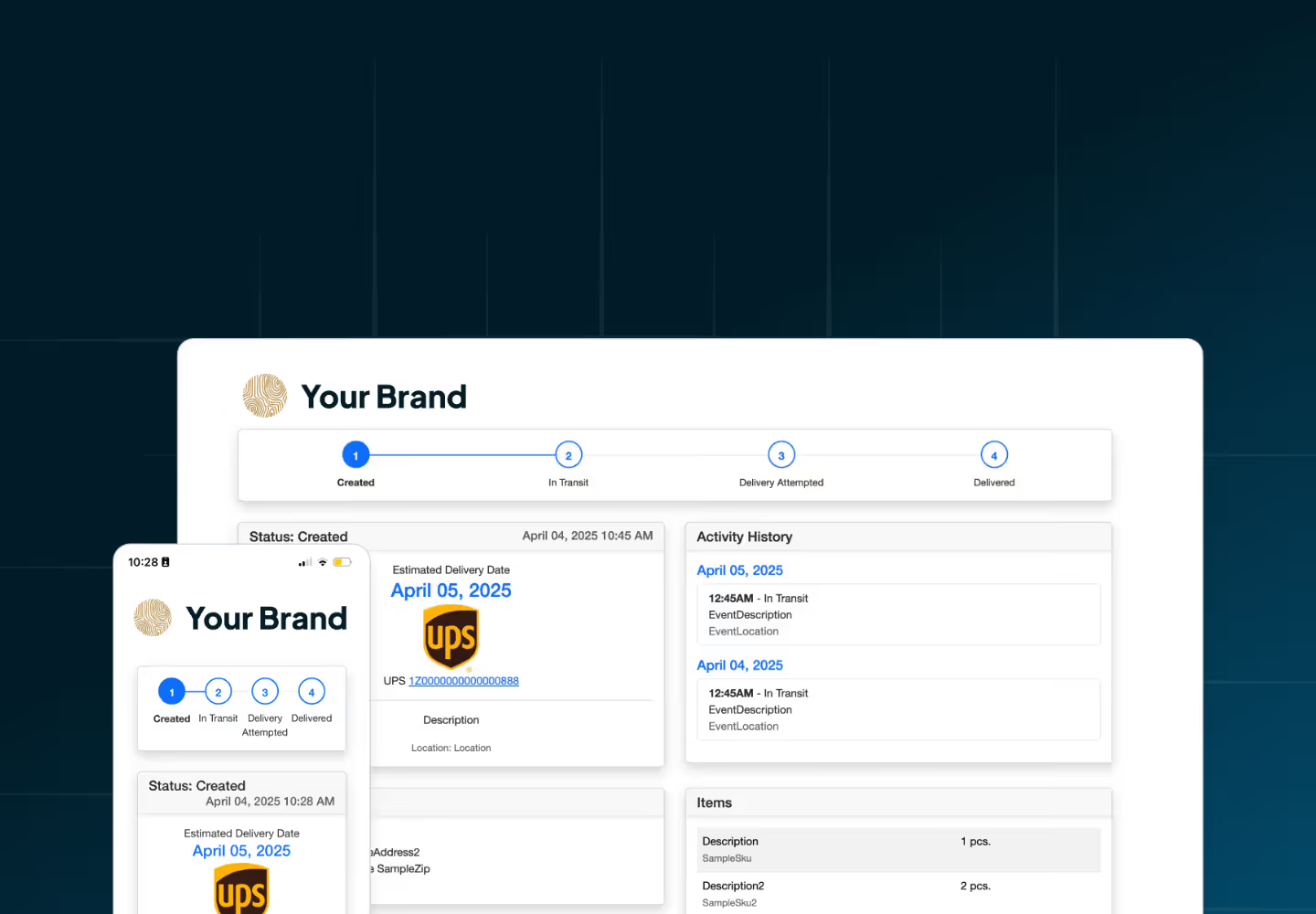
Branded tracking pages replace generic carrier links with a clean, mobile-friendly experience that reflects your brand. Each page shows current status, order details, and a visual timeline of progress.
By keeping tracking within your environment, these pages extend the brand experience beyond checkout instead of handing customers off to a third-party site. That consistency reinforces confidence during the waiting period.
Tracking pages are also one of the most frequently revisited post-purchase touchpoints. When designed intentionally, they create a natural opportunity to reinforce product value, highlight related items, or encourage a return visit, supporting repeat purchases without interrupting the delivery experience.
Automated notifications
Automated notifications deliver updates at key moments such as shipment creation, in-transit milestones, out-for-delivery alerts, and delivery confirmation.
These messages reduce the need for constant monitoring. Updates arrive when something changes, which lowers anxiety and cuts down on routine inquiries.
Photo delivery confirmation
Photo delivery confirmation adds clarity at the final step of delivery. Customers can see where a package was placed, which is especially helpful in shared buildings or busy neighborhoods.
This visual confirmation closes the loop on the tracking experience.
Extending visibility beyond delivery
Delivery outcomes are rarely determined at a single moment. Small signals appear before timelines slip, long before a customer would describe the experience as a problem.
Tracking that surfaces these signals early allows teams to communicate while expectations are still intact. Customers are typically more receptive to an explanation than an apology, especially when the notification comes before a promised date has passed. Early visibility keeps the delivery experience steady, even when conditions change.
That same need for visibility continues after the package arrives. For returns, customers want confirmation that items were received and are moving toward resolution. Without that confirmation, uncertainty returns and follow-up inquiries increase.
Extending tracking beyond delivery closes this loop. Clear, timely updates reassure customers that the process is still moving forward and that resolution is underway, supporting a more complete post-purchase experience.
Bringing parcel tracking into one consistent experience
A consistent parcel tracking experience works on two levels, creating a smoother delivery experience for customers and a more manageable tracking process for internal teams.
For customers, consistency removes guesswork. Status updates follow a familiar pattern, delivery timing is easier to interpret, and changes feel expected rather than surprising. Customers spend less time checking for reassurance and more time trusting that the delivery is progressing as planned.
Internally, that same consistency simplifies execution. Centralized tracking logic, carrier updates, notifications, and branded touchpoints replace carrier-specific workflows and fragmented signals. One system governs how updates are interpreted, communicated, and escalated, even as carrier mix and volume change.
ShipWise Tracking connects these two layers. Customer-facing tracking remains clear and on-brand, while multi-carrier tracking data flows through a single, standardized process behind the scenes. The result is fewer handoffs, fewer exceptions, and a delivery experience that scales without becoming harder to manage.


.svg)
.svg)
.avif)
.avif)
.svg)

