
Every e-retailer has a preferred carrier. Maybe it’s for their pricing, reliability, or long-standing service relationship. Over time, that familiarity can start to feel like second nature, but when all your shipments run through a single provider, flexibility disappears the moment something goes wrong. Delays, surcharges, or service outages can disrupt your entire operation.
A multi-carrier shipping strategy gives teams more control. Working with a mix of national and regional providers lets you route shipments based on cost, speed, performance trends, and reliability. The strategy is not about adding complexity. It is about creating a system that stays steady through peak seasons, market changes, and everyday volume swings.
A flexible carrier mix supported by shipping automation automation software keeps orders moving and helps your business grow without the risk of bottlenecks.
Benefits of a multi-carrier shipping approach
When you depend on one carrier, you also depend on their systems, requirements, and schedules. A multi-carrier shipping solution offers more balance and resilience by allowing you to:
- Mitigate risk if one carrier is delayed, another can step in.
- Lower costs by rate shopping between carriers and accounts to find the best option for each shipment.
- Improve delivery speed since regional carriers often outperform nationals in specific zones.
- Adapt easily by rerouting volume as conditions change.
Having multiple carrier accounts does not mean you need to use them every day. Think of it as shipping insurance. You have options when you need them most, especially during peak demand. Regional carriers, in particular, give you an extra layer of flexibility, helping you maintain delivery promises even when national networks reach capacity or extend transit times.
Multi-carrier shipping technology
Managing several carrier integrations by hand is difficult. Each provider has unique rules, labels, service definitions, and requirements. When your team maintains every integration separately, even a small change can create errors or slow down fulfillment.
Multi-carrier shipping platforms centralize these details so your team works inside one environment with standardized workflows. All routing logic, service groups, packing rules, and performance data live in a single place, which keeps operations consistent and reduces manual decision-making.
This foundation is what separates basic tools from more advanced systems. Once the core connections are centralized and stable, the platform’s capabilities start to matter much more, especially as order volume grows or your network becomes more complex.
Platform tiers
Not all shipping platforms offer the same depth of features. Some tools simply connect multiple carrier accounts. They can generate labels but offer limited control over how services are applied. These basic systems work well for smaller e-commerce teams with simple needs, little operational change, and tighter budgets.
Other platforms include the fundamentals you would expect in an enterprise shipping software, such as batch processing, order syncing, and basic automation. Even so, many of them require developer support to maintain integrations or update routing rules. Small changes, like adding a new carrier or adjusting a service group, can slow teams down and create avoidable bottlenecks.
ShipWise gives operations teams direct control over how shipping decisions are made. Business logic lives in the platform, not within code or one-off workarounds, so teams can scale volume without locking themselves into rigid processes. This approach supports consistent execution across warehouses, clients, and brands while still allowing teams to adjust routing, services, and rules quickly as conditions change.
Automated order routing
In multi-location operations, automated order routing directs each order to the optimal warehouse and packing station using data such as proximity, inventory levels, destination zone, and delivery SLA. It’s achieved through integration between your WMS and shipping API, where writebacks keep both systems aligned.
Dynamic carrier selection
Rather than mapping out carrier services to each destination or shipping zone, your platform should allow you to rate shipments against a group of services. ShipWise does this using live rates through carrier APIs. The system chooses the best option that meets both delivery expectations and cost goals. Over time, this creates a clear picture of how each carrier performs across zones, seasons, and product types. Teams can then refine their carrier mix using real performance data instead of assumptions.
High-volume batch processing
Large batches shouldn’t force you to use the same service for every shipment. Each order should be rated individually against live carrier data so you’re always using the most efficient option. As a best practice, your system should process labels in under two seconds per shipment - fast enough to keep operations running smoothly even during peak demand.
Compliance management
You shouldn’t have to think about carrier label formats, documentation standards, or communication protocols. A strong multi-carrier platform manages these details behind the scenes so your workflows stay compliant and consistent as carrier specifications evolve. This removes the need for constant internal updates or reconfigurations and helps your team focus on fulfillment instead of maintenance.
Standardized, scalable workflows
Automation also creates consistency. Centralizing routing logic and carrier rules allows you to define reusable shipping profiles - collections of configurations that store preferences, mappings, and automation rules. These profiles make it easy to onboard new carriers, brands, or fulfillment locations while maintaining a uniform process across your network.
Designing your rate shop strategy
Setting up strategic rate shops, or carrier service groups, is about identifying which carriers perform best by region and service type, then configuring logic to use those strengths automatically. Certain carriers may excel in specific zones, so an order shipped locally might move faster and cheaper with a regional carrier, while a Zone 8 destination may be better suited to a national ground or air service.
ShipWise real-time rate shopping uses this context to evaluate options dynamically at the time of processing. Instead of relying on static preferences, the system compares live carrier rates and service data against your defined business rules to determine the best option for each order.
Rating options
Depending on your industry or the products you ship, you may need additional criteria in your rating strategy. For example, if you’re shipping perishables or honoring a customer’s two-day selection at checkout, your system should support transit-time parameters inside each service group so only qualifying services are eligible.
Most platforms rely on static or carrier-provided estimates, which can drift from real performance. When delays become consistent, rating decisions need stronger data. If your platform gives you access to historical transit times, you can spot services that routinely arrive earlier or later than expected. Applying these insights to your service groups helps prevent customer issues and reveals opportunities to lower costs without risking reliability.
Rate by lowest cost
The most straightforward strategy, used when minimizing spend, is the top priority. The system automatically selects the least expensive service that meets your shipping requirements.
Rate by transit time (+ lowest cost)
Ideal for balancing SLAs and budget. The system prioritizes the most cost-efficient service that meets a defined transit time window, enabling teams to control delivery commitments precisely. For example, if your SLA is “deliver within three business days,” the system identifies the most cost-effective one that meets this commitment.
Rate by delivery date (+ lowest cost)
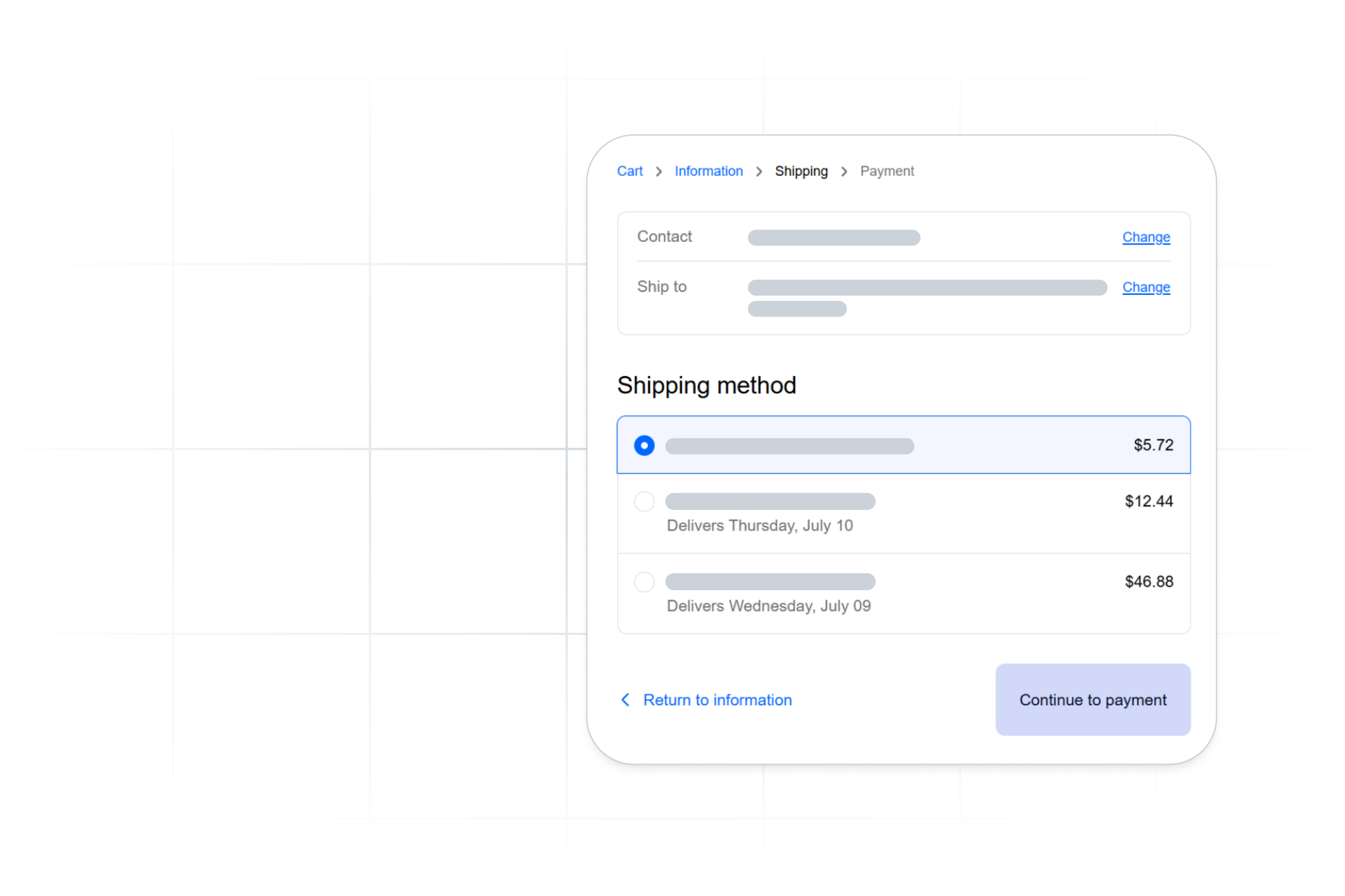
This mode prioritizes the promised delivery date instead of static transit times or business day estimates. It uses carrier-provided commitments to determine which service can meet your target date at the lowest possible cost. This approach is especially effective for e-commerce shippers who display delivery dates at checkout and need accuracy without overpaying for faster services.
Rate by AI-powered delivery date estimates (+ lowest cost)
ShipWise enhances rudimentary rate shopping by leveraging proprietary historical performance data, not just carrier-declared transit times. This AI-driven approach predicts actual delivery dates based on aggregated performance across millions of shipments, providing a more reliable estimate of real-world delivery speed before selecting the lowest-cost qualifying service.
Where analytics add value
A strong multi-carrier strategy becomes even stronger when it is guided by shipping data analytics. Reviewing delivery patterns, surcharge trends, invoice accuracy, and carrier reliability helps teams refine routing throughout the year.
What to look for in your data
A few areas worth reviewing include delivery times by zone, recurring surcharges, cost per pound by service, and exception patterns such as delays or repeated returns. These signals highlight where a different carrier may perform better or where a small rule change could help control cost without affecting the customer experience.
How to apply analytical insights
The value comes from acting on these patterns. When analytics show that a carrier consistently performs well in a certain region, you can shift volume toward that lane with confidence. If data shows rising accessorials for specific package types, you can adjust packing rules or update your cartonization strategy to keep billable weight in check. Over time, these small refinements strengthen your network and help your team make decisions that stay aligned with real operational behavior, making it easier to scale efficiently and profitably.
Practical triggers for shifting carriers
Most teams adjust their carrier mix when they notice patterns such as rising surcharges, changing transit times, new warehouse locations, higher return volume, or weather-related slowdowns. Small signals often show up in analytics before issues become widespread. Monitoring these trends helps you adjust before performance slips.
Multi-location and multi-brand considerations
Operations gain complexity when you work across multiple warehouses or manage several brands. Each location may need its own carrier mix, inventory rules, or routing preferences. A multi-carrier system supports this by letting you configure rules per location or brand without rebuilding everything from scratch. This structure also works well for 3PLs that need client-level customization.
Year-round stability with multi-carrier shipping
Holiday peaks are the most visible stress test for shipping networks, but the same volatility can appear at any time due to weather, facility closures, or unexpected volume changes. A diverse carrier portfolio helps maintain steady operations throughout the year.
Real-time rate shopping keeps costs in check during promotions or seasonal launches. Automated routing reduces labor needs as volume grows. Performance data provides early warnings when service levels start to shift.
What to evaluate next
Teams looking to strengthen their carrier strategy can start by reviewing their current volume by zone, the accuracy of delivery estimates, the frequency of unexpected surcharges, and how often carriers deviate from expected timelines. It helps to evaluate whether your platform rates each shipment individually, whether routing rules are current, and whether seasonal patterns create bottlenecks. Small adjustments in these areas can create noticeable improvements in cost and reliability.
Final takeaway
A multi-carrier shipping strategy builds a more adaptable and predictable logistics network. When each carrier is used in the situations where it performs well, shipping becomes steadier and easier to control. With the right technology guiding your routing and cost decisions, you can create a shipping process that supports growth, reduces risk, and maintains a smooth flow of orders year-round.



.svg)
.svg)

.avif)
.svg)
.avif)